In an April 1939 Billboard advertisement, Ben the Rodeo Tailor offered made-to-order suits and pants, announced a free catalogue and printed a Philadelphia address. The notice spoke to rodeos, circuses and cowboy bands. The tailor stayed in the city; the clothes and the catalogue were meant to travel. That tension—between a fixed shop and a moving clientele—runs through the Rodeo Ben record.1
A shop built around the catalogue
The Country Music Hall of Fame dates Bernard Lichtenstein’s Western-wear shop to 1930. By December 1936, Billboard was promoting a new catalogue under the name Ben the Rodeo Tailor. The address on that notice reads 3209 North Columbia Avenue; a 1937 advertisement and notices from 1938 onward print 3209 West Columbia Avenue. The small directional change belongs to the printed record. The advertisements otherwise keep returning to the same Philadelphia shop and the promise of clothes made for Western customers.2, 3, 4, 5
In November 1937, the advertisement promised clothes “Made Individually to Personal Measurement.” The following spring, an ad addressed cowboys, cowgirls and children; by August it described made-to-order clothing and another free catalogue. In 1939, Billboard noted that Ben had returned to Philadelphia after three major rodeo championship contests. The catalogue notices and rodeo reports together show a business that followed a circuit without abandoning its city base.4, 6, 7, 8
An April 1940 catalogue advertisement listed shirts, jackets, trousers, capes, boots and hats. It was not a narrow sideline in decorated suits: the shop offered a wardrobe from head to toe. In August 1941, Ben advertised a free illustrated guide to Western and rodeo clothing. May 1943 brought a personal note addressed to cowboy friends and customers serving in the U.S. armed forces. By 1944, the ads called the goods “Western Ranchwear”; in 1945, they singled out woollens. Across these notices, sales language shifts with seasons and audiences, while the catalogue remains a way for the shop to reach beyond Philadelphia.9, 10, 11, 12, 13, 14
A wardrobe for particular people
The Autry preserves three Rodeo Ben shirts associated with Gene Autry, each with its own materials and decoration. A 1930s wool-and-cotton-gabardine shirt has brown piping, crescent-arrow pockets, appliqué, embroidery, sequins, beads and mother-of-pearl snaps. A 1950s silk shirt and scarf pair orange piping and floral appliqué with a shaped yoke and slash pockets. A third shirt, dated only to the mid-twentieth century, uses pink-and-yellow acetate, yellow piping, machine embroidery, appliquéd feathers and rhinestones. These records describe individual objects, not a universal Rodeo Ben pattern.15, 16, 17
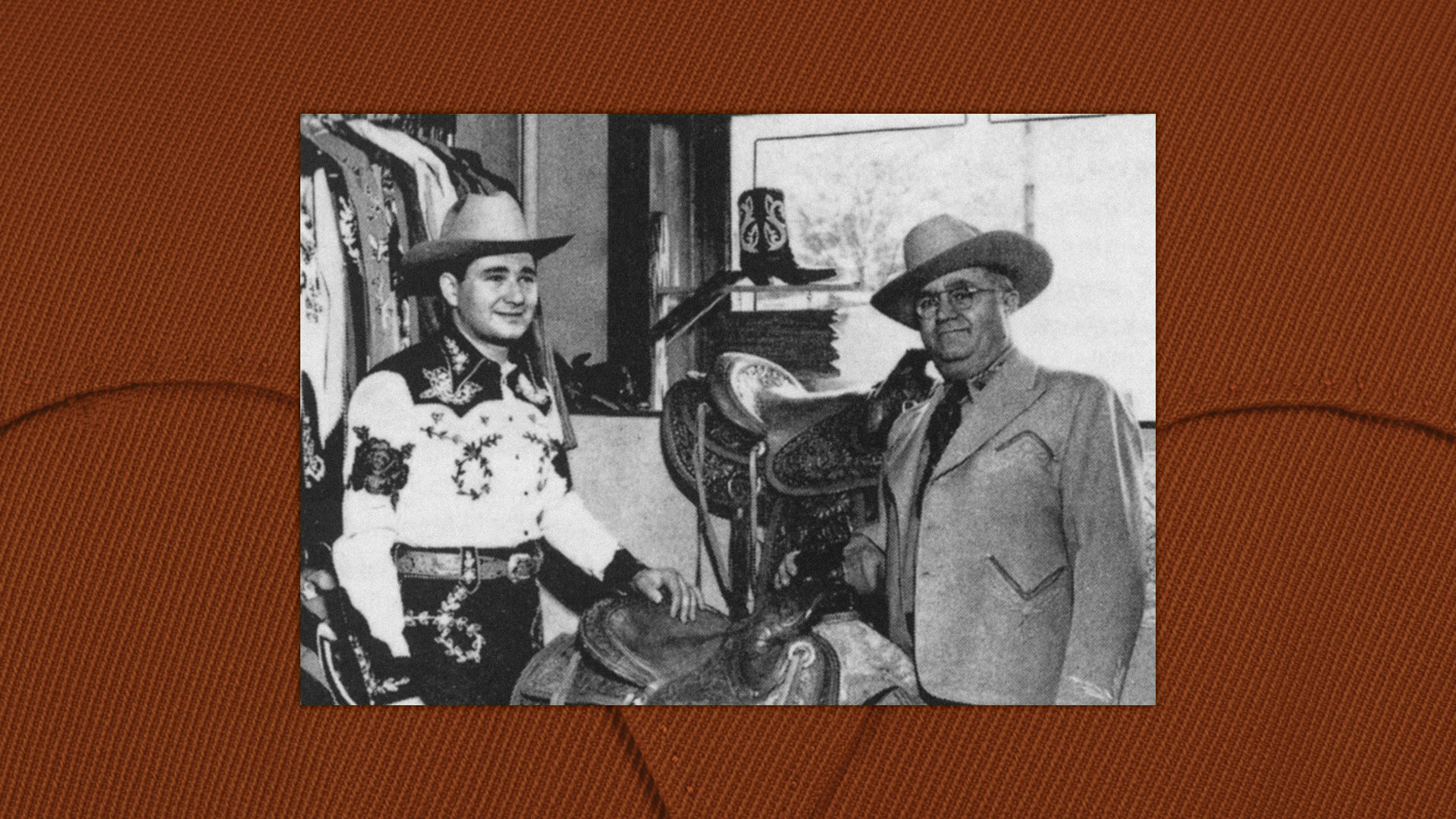
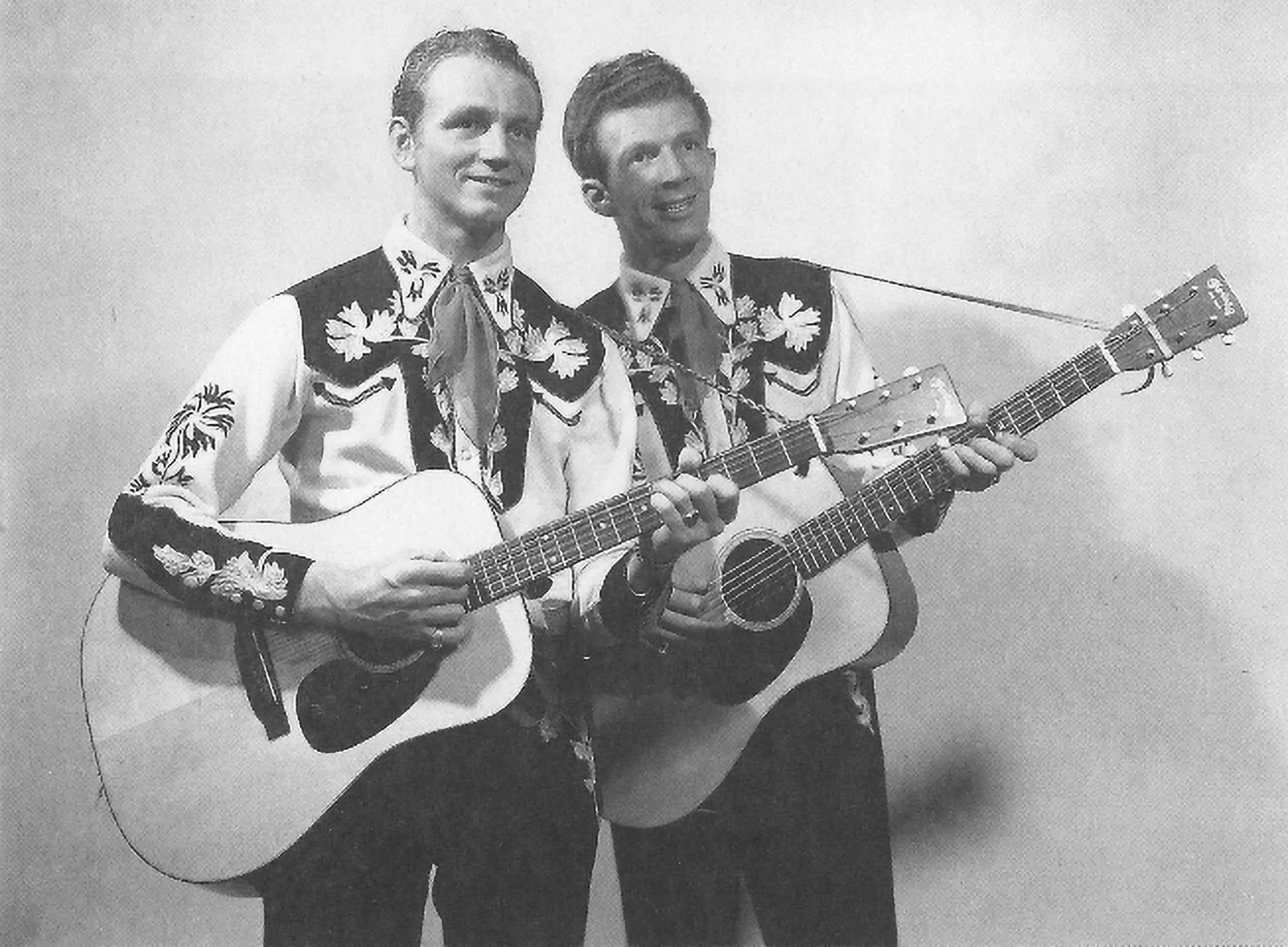
Other museum-presented clothes connect the tailor to named performers. The Hall of Fame describes a wool-gabardine outfit for Schuyler “Sky” Snow with a shaped yoke, piping, V-shaped smile pockets, arrowhead stitching, scalloped cuffs and chain-stitch flowers. It identifies embroidered and rhinestoned hawks on a garment for Hawkshaw Hawkins. The details turn a customer’s name or stage image into part of the clothing.2
The business also entered the mass-market story of Wrangler. Museum and company accounts attribute the 1947 Original Cowboy Cut jeans to Rodeo Ben. Two Texas newspaper reports from 1952 say Blue Bell gave rodeo cowgirls Wrangler jeans-and-shirt sets and identify Ben as the designer. In 1953, a retailer advertised denim shirts as “Styled by Rodeo Ben.” A 1955 Billboard ad described him as designer of Blue Bell Wrangler products. These period and institutional statements document an association between Ben’s name and Wrangler; they do not, by themselves, lay out the exact contracts, factory process or division of design work.2, 18, 19, 20, 21, 22
The workshop fire
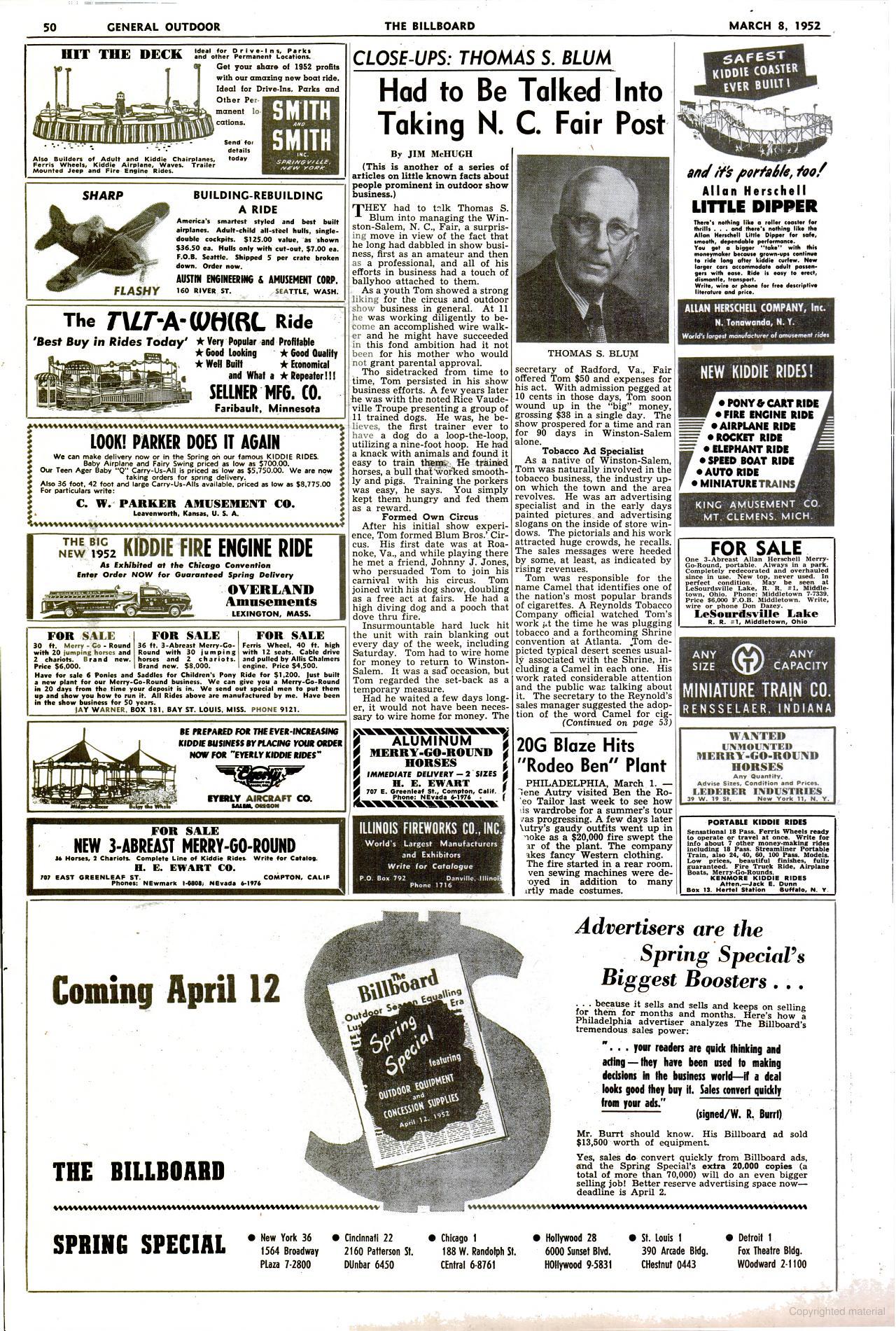
In February 1952, a Philadelphia fire entered the national trade press. A United Press report printed by the Medford Mail Tribune quoted Ben’s estimate of $20,000 in damaged cloth and clothing and relayed his statements about garments associated with Gene Autry and Tom Mix. A March Billboard report said Autry had visited to see progress on a summer-tour wardrobe before a fire swept the rear of the plant; it reported seven destroyed sewing machines and many costumes. The two accounts give different snapshots of the loss. Their common focus is a working shop—cloth, machines and performers’ clothes in progress—not only a label or a finished suit.23, 24
The name after the shop
Advertisements continued to present Rodeo Ben as a tailor to performers. In 1951, Billboard addressed entertainers, riders, showmen, television, Western show classes, rodeos and musical groups. A 1953 ad gave the same range and printed 3209 West Columbia Avenue. A Country Music Who’s Who directory later listed him at 6240 North Broad Street. The trade record shows the name moving through advertisements and directories over time, even as the business address and product language changed.25, 26, 27
A 1971 trademark filing gives the later name a formal legal record. The 1973 registration certificate identifies “RODEO BEN” as a Philadelphia partnership and says the pseudonym referred to Bernard Lichtenstein, Rodeo Ben Sr., and Gerson Lichtenstein, Rodeo Ben Jr., whom it describes as designers of Western-style clothing. It also records the partnership’s claimed first-use date and the goods covered by the mark. Those are the certificate’s legal statements; they are not an independently reconstructed history of ownership or proof of uninterrupted business from the early shop.28
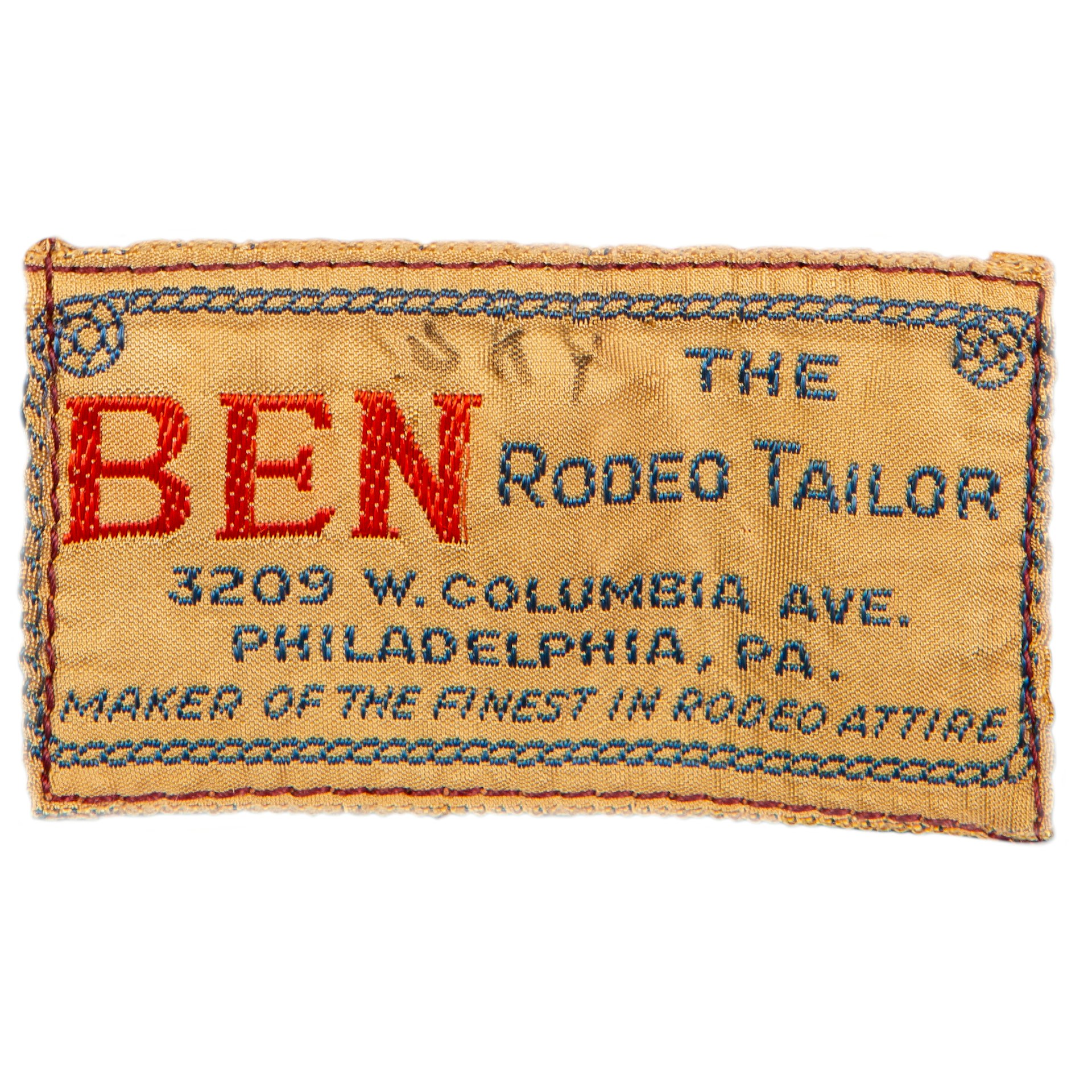
The Hall of Fame’s exhibition label reads “BEN THE Rodeo Tailor” and gives the West Columbia address. In a shop catalogue, on a label, beside a Wrangler shirt or in a Gene Autry wardrobe, the name could travel into very different settings. The evidence follows it from Philadelphia’s mail-order trade to entertainers’ clothing and brand advertising. At each step, the sources show something different: what the business offered, what a garment looked like, or how a later legal filing described the name.2, 1, 15, 22, 28
Sources
- Billboard, 8 April 1939
- CMHOF, “Rodeo Ben: The Expression of Perfection”
- Billboard, 26 December 1936
- Billboard, 27 November 1937, Internet Archive scan
- Billboard, 26 November 1938
- Billboard, 9 April 1938
- Billboard, 27 August 1938
- Billboard, 9 December 1939
- Billboard, 13 April 1940
- Billboard, 30 August 1941
- Billboard, 29 May 1943
- Billboard, 27 May 1944
- Billboard, 2 December 1944
- Billboard, 31 March 1945
- Autry Collections, Rodeo Ben shirt 91.221.560
- Autry Collections, Rodeo Ben shirt and scarf 91.221.557
- Autry Museum, Rodeo Ben shirt worn by Gene Autry, object M533534
- Wrangler, “Our History”
- The Floyd County Hesperian, 31 January 1952, p. 1, “Floydada Cowgirl Sweetheart Given Wranglers Jeans”
- The Lynn County News, 8 February 1952
- Coquille Valley Sentinel, 28 May 1953, printed p. 3
- Billboard, 9 April 1955, printed p. 114 / Google Books `PA114`
- Medford Mail Tribune, 22 February 1952, p. 3
- Billboard, 8 March 1952, printed p. 50 / Google Books `PA50`
- Billboard, 25 August 1951
- Billboard, 27 June 1953, printed p. 78 / Google Books `PA78`
- Country Music Who’s Who, 1960
- USPTO TSDR, RODEO BEN, serial 72399414